Most guitarists who have played for years can still only solo well in one or two spots on the neck. The usual cause is not a lack of speed or theory. It is that the fretboard was learned as a few memorized boxes with gaps between them. Splitting the neck into five connected shapes is the standard fix, and it works if you use it deliberately. Below is how the system works, how to practice it, and where it falls short.
A note on sourcing: Fretboard Compass may earn a commission if you buy through links on this site. We only describe what is publicly documented about courses and have not claimed hands-on use of any program mentioned here. Confirm current details on each official site.
What the 5 shapes actually are
Any major scale (and its relative minor) can be played in five fingerings that together cover the whole neck. Each shape contains the same seven notes. They differ only in where the notes sit relative to your hand. Shape 1 ends where shape 2 begins, shape 2 overlaps shape 3, and so on, until shape 5 connects back to shape 1 an octave higher.
Many players know this as the CAGED system or as the "five positions." Names and numbering vary between teachers, so the labels matter less than the principle: every note on the neck belongs to at least one shape, and neighboring shapes share notes. Those shared notes are your exits.
Why overlap matters more than the shapes
Learning the five shapes in isolation gives you five boxes. Learning the overlaps gives you a map. If you can't move from one shape to the next in the middle of a phrase, you will still end up playing in the same corner you always do. Some programs build their method around these transitions. For example, the Nucleus Patterns Method uses a concept of connecting points; see What are the 4 doorways between positions in the Nucleus Patterns Method? for how that course describes it.
A practical way to learn them
Step 1: Pick one key and stay there
Choose a key such as A minor or G major. Don't change keys until all five shapes are comfortable. Changing keys too early is the most common way to stall.
Step 2: Learn one shape per week, not per day
- Play the shape ascending and descending, saying note names aloud.
- Locate every root note inside the shape.
- Play it over a drone or simple backing track.
- Improvise using only that shape for five minutes, with no escape.
Step 3: Link neighbors
Once you know two adjacent shapes, play a line that starts in one and ends in the other. Slide on a single string first, then move through the shared notes across strings. Repeat for each pair, including 5 back to 1.
Step 4: Solo through the whole neck
Play a slow backing track and move from the lowest shape to the highest and back over several minutes. Notice where you hesitate. Those spots are your next practice targets.
Step 5: Target chord tones
Scales alone sound like scales. Once shapes are solid, aim phrases to land on the root, third, or fifth of the current chord. This is what turns neck knowledge into melodic soloing.
Common problems
- Memorizing fingerings without note names. You can't connect shapes if you can't find the roots.
- Practicing only up and down. Real solos skip, repeat, and change direction. Practice intervals and fragments inside each shape.
- Ignoring technique. Moving between positions at tempo demands clean coordination. See Two-Hand Integration Etudes: Tightening Your Picking and Fretting Coordination for exercises aimed at that.
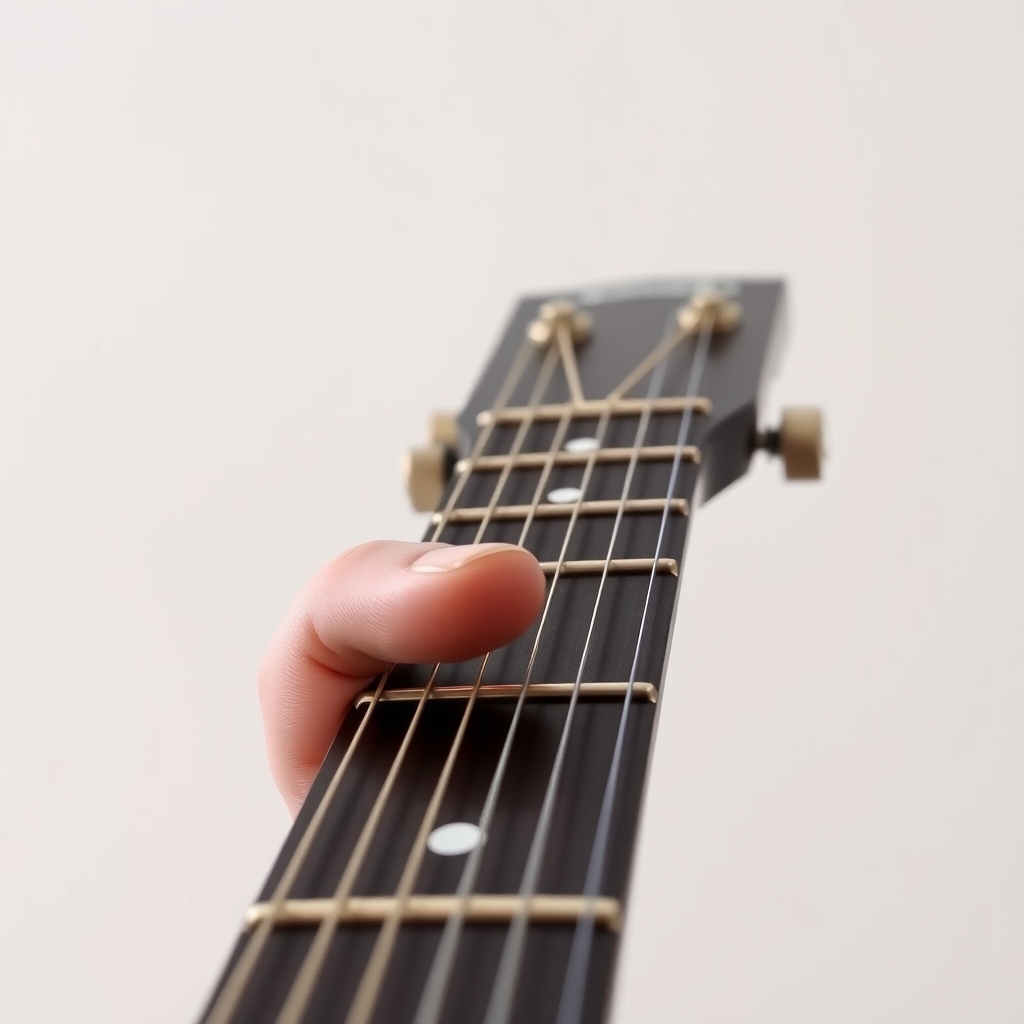 Recommended for youTwo-Hand Integration Etudes: Tightening Your Picking and Fretting Coordination
Free resources versus a structured course
| Factor | Self-study (free material) | Structured course |
|---|---|---|
| Cost | No direct cost | Varies; check the official site |
| Sequencing | You assemble it yourself | Set order of lessons |
| Accountability | Entirely on you | Built-in progression, though you still have to practice |
| Fit to your level | Easy to cherry-pick, easy to skip gaps | May repeat basics you know |
| Feedback | Forums or a teacher | Depends on the program; verify what is offered |
The five-shape concept is widely taught and you can learn it without paying for anything. A course is worth considering if you have tried and keep abandoning the process, or want the order decided for you. It is not worth it if you only need the shape diagrams.
Honest tradeoffs
- Shapes are a map, not music. They won't teach phrasing, rhythm, or taste. You still need to learn licks, listen, and play with other people.
- Several weeks to months of consistent work is a reasonable expectation for real fluency, but results depend on your practice time and starting point. No one can promise a timeline.
- Experienced players may feel slowed down at first. Restricting yourself to one shape feels limiting. That is the point of the exercise.
Where to go next
If you want to see how one specific course structures this material, read What's Inside Adam Loves Guitar. It covers what is publicly documented about the program, what it appears to include, and what it doesn't. Check the official site for current pricing, terms, and any refund policy before buying, since those details change.
Whichever route you take, start this week: pick one key, learn one shape, and use it to improvise for five minutes a day.
Keep reading
 What are the 4 doorways between positions in the Nucleus Patterns Method?We can't give you the names of the four doorways, because we haven't found them documented publicly…
 Best Minor Pentatonic Guitar Course for Intermediate SoloistsShort answer: the best minor pentatonic course for an intermediate soloist is one that moves you pa…
 Is Adam Loves Guitar Right for You? Intermediate, Self-Taught, Blues and Rock PlayersDisclosure: Fretboard Compass may earn a commission if you buy through links on this site. We have…